
Loose or cracked ridge tiles? Signs your ridge needs re-bedding
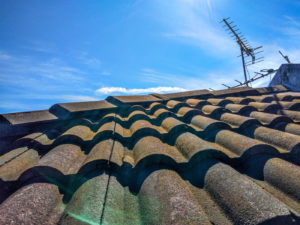
The ridge is the row of tiles running along the very top of your roof, where the two slopes meet. It catches more wind than any other part of the house, and on a lot of older homes in Surrey it’s held in place by nothing more than a bed of sand and cement.
That mortar doesn’t last forever. After a run of windy weeks we usually get a few calls from homeowners who’ve found a lump of cement on the patio or the drive and can’t work out where it came from. Nine times out of ten, it’s the ridge.
What does a ridge tile actually do?
Ridge tiles cap the joint at the top of the roof so rain can’t get in where the two sides meet. On many roofs the ridge also lets the roof breathe, letting moist air out of the loft. If you want to know more about how that works, our roof ventilation FAQs cover it in more detail.
If a ridge tile cracks or works loose, water can run straight down onto the roof timbers. Because the ridge sits above the middle of the house, the damp often shows up on a top-floor ceiling, usually in a bedroom or on the landing.
What are the signs your ridge tiles need attention?
You don’t need to go up a ladder to check. Stand back on the pavement or across the road and have a look, with a pair of binoculars or your phone’s zoom if you have them. Things to look out for:
- Gaps or cracks in the mortar between or under the ridge tiles
- Chunks of mortar in the gutters or on the ground below
- Ridge tiles that don’t sit in a straight line, or one that looks lifted
- A rattling or knocking noise from the roof in strong wind
- Moss or weeds growing out of the joints
- Damp patches on a top-floor ceiling, or daylight showing at the apex when you look in the loft
One loose tile is a quick job. Leave it, though, and the wind gets underneath and starts lifting the ones next to it. The same goes for the main roof tiles, and we’ve written a separate guide on how to tell if your roof tiles have come loose.
Why does ridge mortar fail?
Mostly age and weather. Mortar is rigid, while a roof moves slightly with the seasons. Over the years, hot summers, cold snaps and the freeze–thaw cycle open up hairline cracks, water gets in, and the mortar starts to break down. Exposed roofs on higher ground tend to go first.
The original mix plays a part too. We still come across ridges bedded on a weak, sandy mix that was never going to last, and old ridges that were “repaired” by smearing fresh mortar over the top of the cracks. That covers the problem for a winter or two at most.
Should you re-bed the ridge or switch to a dry ridge?
There are two proper ways to fix a failing ridge on a pitched roof.
Re-bedding the ridge
Re-bedding means lifting the ridge tiles, cleaning off all the old mortar, and laying them again on a fresh bed. The British Standard for slating and tiling (BS 5534) now says ridge tiles must be mechanically fixed, not held by mortar alone, so when we re-bed a ridge we screw or clip each tile down as well. If a roofer quotes you for mortar only, ask them about this. It’s one of the things we mention in our guide on how to spot a roofing scam.
Fitting a dry ridge
A dry ridge system does away with the mortar completely. The tiles are fixed with screws and clips over a roll-out membrane that lets the roof ventilate. It needs very little maintenance and is a good fit for most modern homes with concrete tiles. You can see slim joint strips between the tiles, which some people don’t like on an older property.
Which do we recommend?
Our honest view is that dry ridge is the low-maintenance choice for most houses built from the 1960s onwards. On a period home, or in a conservation area, a properly bedded and fixed mortar ridge usually looks right and lasts well.
Can I fix a ridge tile myself?
We’d really advise against it. The ridge is the highest and most exposed point of the roof, tiles are slippery even when they look dry, and it’s very easy to crack the tiles you’re walking on. Have a look from the ground, take a photo if you can, and leave the climbing to someone with the right access equipment.
Ridge tile repairs in Redhill, Reigate and across Surrey
If your ridge is looking tired, or you’ve found mortar in the garden after a storm, we’re happy to take a look. We repair and replace ridges across Redhill, Reigate, Kingswood and nearby areas of Surrey, and we’ll tell you honestly whether it needs a few tiles re-fixed or a full re-bed. Get in touch with the team at Collier Roofing for a free, no-obligation quote.