
What’s under your tiles? Roofing felt and breathable membranes explained
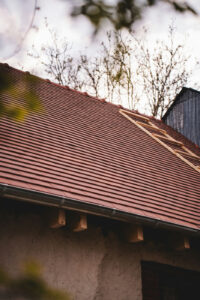
Most people think of a roof as just the tiles or slates. But underneath them is a layer that does a lot of quiet work: the underlay. It catches any rain or snow that blows in between the tiles and runs it down into the gutter, and it helps protect the roof from wind.
If you’ve ever been up in the loft, it’s the black sheet or the lighter fabric you can see stretched over the rafters. Here’s what it does, the main types, and how to tell when yours has had it.
Why does a roof need underlay?
Tiles and slates shed most of the rain, but they aren’t completely watertight. In strong wind, rain and powdery snow can be driven up between them. The underlay is the second line of defence that stops that water reaching the roof timbers and the ceiling below.
It also takes some of the wind pressure off the tiles. That’s why modern underlays have to be fitted to suit how exposed the roof is.
What is traditional roofing felt?
On most roofs from the 1950s to the 1990s or so, the underlay is bitumen felt, a heavy black sheet often reinforced with hessian. It works well at keeping water out, but it doesn’t let water vapour through. That means the loft needs to be well ventilated through the eaves, and sometimes the ridge, to stop condensation building up on the underside.
Felt also has a weak spot at the eaves. The bottom edge of the felt sits over the gutter, where it’s exposed to sunlight and weather, and over time it rots away. When that happens, water running down the felt drips behind the gutter onto the fascia and wall instead of into the gutter. It’s a very common problem, and eaves protection trays are a neat fix.
What is a breathable membrane?
Breathable membranes (also called vapour-permeable underlays) have largely replaced felt on new roofs and re-roofs. They’re lighter, usually a grey, white or coloured fabric, and they stop liquid water getting through while letting water vapour escape from the loft.
That breathability helps reduce condensation. It doesn’t automatically mean a roof needs no ventilation at all, though. Whether extra vents are still needed depends on the membrane and how the roof is built, so it’s something we check when planning a re-roof. Our roof ventilation FAQs explain why it matters.
What about older roofs with no underlay?
Many houses built before the 1950s, including plenty of Victorian and Edwardian homes around Surrey, were built without any underlay. The undersides of the slates or tiles were often pointed with lime mortar instead (a method called torching). If you look up in the loft and can see the back of the tiles, that’s what you’ve got. These roofs can still work, but they rely completely on the tiles staying in good condition.
What are the signs your underlay has failed?
- Felt that has torn, sagged between the rafters or crumbles when touched
- Daylight visible through holes in the felt from inside the loft
- Rotten felt at the eaves, with staining on the fascia or the wall under the gutter
- Damp patches or water stains on the rafters and loft floor after wind-driven rain
- Heavy condensation or mould in the loft, a sign it isn’t breathing (see our post on wet and dry rot in roof timbers)
Can you replace underlay without replacing the roof?
Not really. Because the underlay sits under the tiles and battens, replacing it means stripping the tiles off. The good news is that sound tiles can often be reused, and while the roof is open it’s the perfect time to fit new battens, sort out ventilation and upgrade the insulation. Small repairs at the eaves, such as eaves trays, can be done without stripping the whole roof.
One extra point: if bats use your roof, the choice of underlay is restricted, because some modern membranes can harm bats that roost against them. In that case the work has to follow advice from an ecologist or Natural England.
Re-roofing and underlay repairs across Surrey
Not sure what’s under your tiles, or worried it’s past its best? We can check your loft and roof and tell you what condition the underlay is in. We re-roof and repair pitched roofs across Reigate, Redhill, Kingswood, Lingfield and the surrounding areas. Contact Collier Roofing for a free quote.