Pigeons, squirrels and wasps – keeping pests out of your roof
A roof is meant to keep the weather out, but to a pigeon, a squirrel or a wasp it can look like the perfect place to set up home. Once they’re in, they can cause a surprising amount of damage, and the noise and mess aren’t much fun either.
We’re roofers, not pest controllers, but we spend a lot of time repairing the gaps animals use to get in and fixing the damage they leave behind. Here’s what to look out for.
Which pests cause the most problems in roofs?
Pigeons and other birds
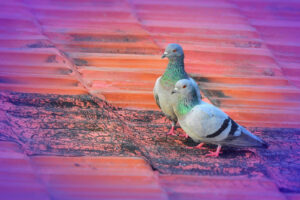
Pigeons love sheltered ledges, and the space under solar panels is a favourite. They also nest in gutters, behind loose fascias and in gaps at the eaves. Their droppings are acidic and messy, and nests can block gutters and downpipes so rainwater spills over or backs up under the tiles.
Squirrels
Grey squirrels are excellent climbers and will chew through rotten fascias and soffits to get into the loft. Once inside, they can gnaw cables, pipes and timbers and tear up insulation. If you hear scratching and scampering above the ceiling in the early morning, a squirrel is a likely suspect.
Wasps
Wasps often build nests in lofts, under tiles or behind soffit boards, usually in spring and summer. A nest can grow very large by late summer. Don’t try to remove one yourself. Call a pest controller to deal with the nest, and then the entry point can be sealed.
A note on bats
Bats sometimes roost in lofts and under tiles too. They’re not pests, and they’re protected by law along with their roosts, even when the bats aren’t there. If you think you have bats, don’t block them in or disturb them. Contact the Bat Conservation Trust’s national helpline for advice before any roof work. A responsible roofer will stop work if bats turn up.
What are the signs you have animals in your roof?
- Scratching, fluttering or scampering noises in the loft, especially at dawn and dusk
- Nesting material, twigs or feathers sticking out of gutters or gaps at the eaves
- Droppings on window sills, patios or under the edge of solar panels
- Chewed or holed fascia and soffit boards
- Torn-up or flattened loft insulation
- A steady stream of wasps going in and out of one spot on the roofline
How do you keep pests out of your roof?
Seal up the gaps
Most pests get in through damage that’s already there: a broken tile, a slipped ridge, a rotten fascia, or a gap where the soffit meets the wall. Repairing these is the single best thing you can do. If your roofline boards are past repair, replacing them with uPVC fascias and soffits closes up the gaps for good.
Fit bird-proofing
Bird comb at the eaves, mesh around solar panels, and guards or caps on chimney pots all help to keep birds from nesting where they shouldn’t. Gutter guards can stop nests and leaves blocking the gutters.
Time the work right
Wild birds’ nests are protected while they’re being built or used, so bird-proofing is best done outside the main nesting season. Any active nests should be left until the birds have finished with them. Late autumn and winter are ideal for getting this work done.
Keep up with maintenance
A roof that’s checked regularly is far less likely to give animals a way in. Trimming back overhanging branches also helps, as they act as a ladder for squirrels. We’ve written more about this in our guide to removing debris safely from your roof.
Repairing the damage pests leave behind
Once the animals have gone, it’s worth getting the roof looked over. We often find chewed fascias, blocked gutters, damaged insulation and the odd lifted tile. Fixing these properly stops the problem coming straight back, and stops rainwater following the same route in. If water is already getting through, see our advice on dealing with a roof leak.
Roof and roofline repairs across Surrey
If birds, squirrels or wasps have been getting into your roof, we can repair the damage and seal up the gaps. We cover Redhill, Reigate, Kingswood, Lingfield and the surrounding areas. Get in touch with Collier Roofing for a free quote.